AI · Nov 19, 2026
By try.tools

AI video generation has moved from short, experimental clips to a practical production tool for filmmakers, marketers, social-media creators, educators, developers, and businesses. Today, AI platforms can turn a text prompt or a single image into cinematic footage, generate synchronized sound and dialogue, and keep characters consistent across multiple shots.
However, not every AI video platform serves the same purpose. Some specialize in cinematic text-to-video models, others focus on UGC-style video ads, avatar presenters, stock-footage videos, short-form social content, or models that developers can build on. The landscape also keeps shifting: for example, OpenAI discontinued its Sora app and API in 2026, while newer model families from Google, Kuaishou, ByteDance, Alibaba, and others have continued to advance.
This guide explores the 12 best AI video generation and text-to-video tools in November 2026, covering their key features, strengths, limitations, and how they compare.
This list combines two types of discovery:
The Discovery Pick is not intended to suggest that a newer product has more historical reputation than the established platforms listed below it. It highlights a product that may be worth trying based on its technology, features, direction, public signals, and potential.
Transparency: A Try.Tools Discovery Pick may include a commercial partnership. Commercial participation does not guarantee a positive assessment and does not determine the comparative ranking of positions 2–12.
We considered several important factors when comparing these platforms. The goal is to understand their practical capabilities rather than rank them only by popularity.
Note: AI video products and their capabilities change frequently. Some features, pricing, clip lengths, and licensing conditions may depend on the platform, model, account, or subscription plan. Always review the provider's current terms before using generated content commercially.
UGCad AI is our Discovery Pick for this edition because it targets a very specific and fast-growing need: turning a product URL, a prompt, or one of 200+ templates into a UGC-style video ad without a camera, creator, or studio. Instead of generating abstract cinematic clips, it is built around the full ad workflow, from script and avatar to editing and publishing.
For e-commerce brands and performance marketers who need many ad variations quickly, it combines AI avatars, multilingual voiceovers, and direct publishing to ad platforms in a single workspace.
DTC brands, e-commerce marketers, performance marketing teams, social-media advertisers, and independent creators who want UGC-style video ads together with supporting tools.
Explore: Visit Try.Tools to discover UGCad AI and other AI video tools.
11 tools from the Try.Tools directory

Video Tools
Google Veo is a video generation tool that creates immersive, high-fidelity cinematic videos by synchronizing native audio with visuals for realistic storytelling.
Video Tools
Kling AI specializes in generating highly realistic animations featuring natural human gestures, flowing fabric, and water dynamics, prioritizing believable physics over stylized effects.
AI & Automation
Runway is an AI-powered platform offering advanced tools for video editing, text-to-video generation, and image manipulation, designed for creators and media professionals.
Video Tools
Online Seedance 2.5 AI video generator: text-to-video, image-to-video, cinematic controls, free trial.
AI Video - Video Generators
Indie developers can animate a changelog screenshot in Wan 3.0 into a brief Wan 3.0 teaser for each release.
Video Tools
Luma Dream Machine offers natural-looking, cinematic camera movements with an easy-to-learn interface, producing smooth, eye-catching videos from both text and images.
AI Video - Video Generators
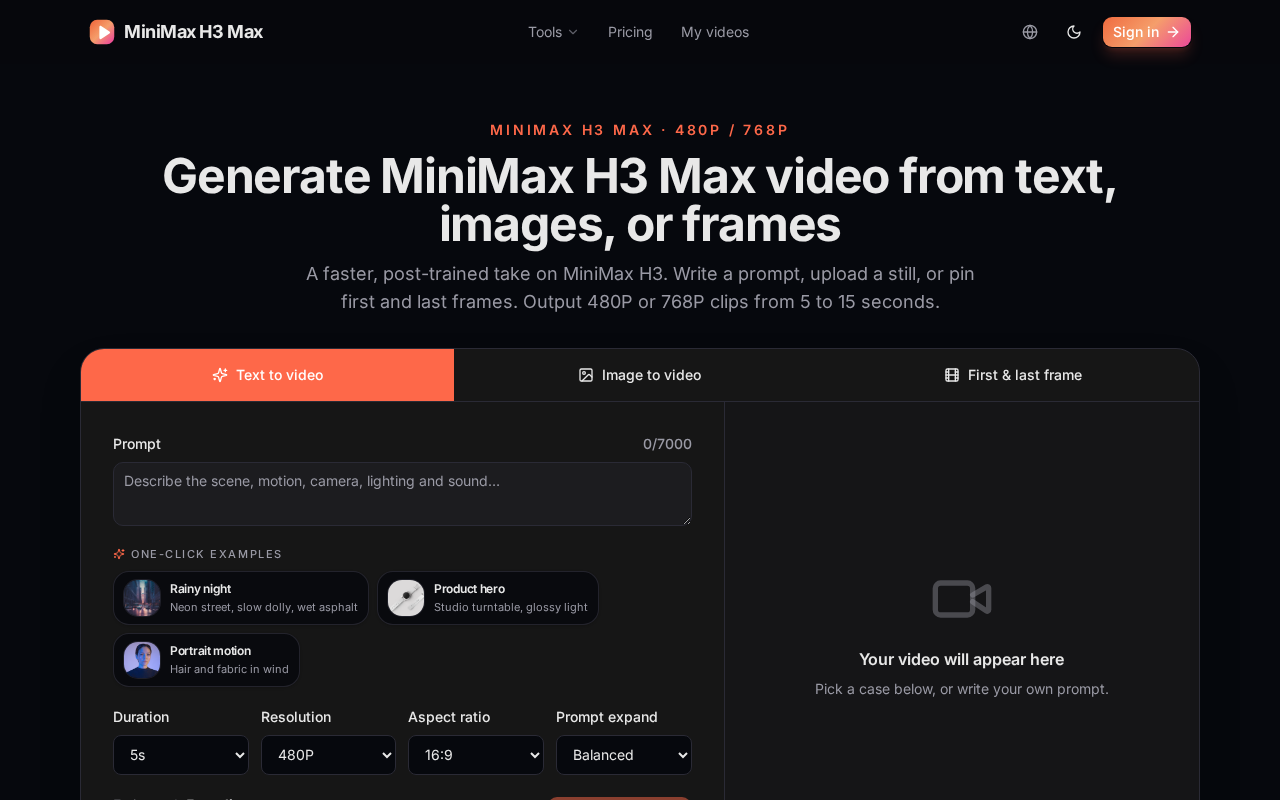
Independent studio (not official MiniMax). Text/image/first-last frame to video. 480P/768P, 5-15 seconds.
Video Tools
HeyGen is an AI-powered platform for creating avatar and talking-head videos, enabling teams and professionals to generate high-quality, localized video content efficiently.
Video Tools
AI avatar video creation platform for training and explainers.
AI Video - Text To Video
Transform text, images, and videos into dynamic, high-quality content
AI Video - Video Generators
Free AI video and image generator in your browser. Create short videos and images from text or photos with free daily credits.
Google's video generation technology is one of the most widely recognized in the category. Veo 3.1 is known for cinematic text-to-video and image-to-video generation with synchronized audio, and Google now delivers its video capabilities across its ecosystem, including Flow, the Gemini app, Google AI Studio, and Vertex AI, with newer capabilities arriving through Gemini Omni.
For creators and businesses already working in Google's ecosystem, it offers a direct path from prompt to finished clip, along with options for developers and enterprises.
Filmmakers, marketers, YouTube and Shorts creators, developers, and businesses that want cinematic AI video within the Google ecosystem.
Explore: Visit Try.Tools to discover Google Veo and other AI video tools.
Kling AI, developed by Kuaishou, is one of the strongest names in AI video generation. Its 3.0 family introduced audio-native generation and multi-shot storytelling, and the newer Kling 4.0 extends the platform toward longer takes and more detailed keyframe control.
The platform is widely used for realistic people, action scenes, and multi-shot sequences, and it also offers a free tier for experimentation.
Creators, filmmakers, advertisers, and storytellers who need realistic people, action, and multi-shot sequences.
Explore: Visit Try.Tools to discover Kling AI and other AI video tools.
Runway is one of the most established names in generative video, built around a professional creative workflow. Its Gen-4.5 model is known for motion quality and controllable camera work, while Aleph and its editing tools allow creators to modify existing footage rather than only generate new clips.
It appeals to teams that want generation and editing in one environment.
Filmmakers, ad creatives, designers, and production teams who want precise control and editing alongside generation.
Explore: Visit Try.Tools to discover Runway and other AI video tools.
Seedance 2.5 AI is an online studio for generating cinematic short clips from text prompts or reference images, built around the Seedance family of video models. It runs entirely in the browser, so there is no local GPU setup, and it gives creators control over motion, lighting, composition, and pacing.
It is especially relevant for creators who want a guided, prompt-friendly workflow for social ads, storyboards, and product videos.
Social-media creators, advertisers, e-commerce teams, and filmmakers who want quick cinematic clips with strong prompt tools.
Explore: Visit Try.Tools to discover Seedance 2.5 AI and other AI video tools.
Wan 3.0 is the latest release in Alibaba's Wan video model family, which has built a strong reputation for quality and value and has been influential among developers through earlier open-weight releases. Wan 3.0 raises generation length to as much as 30 seconds in a single clip, long enough for continuous camera moves and one-take sequences.
It also accepts unusually varied inputs, from text and images to audio, video, and documents.
Filmmakers, short-drama creators, advertisers, educators, and product teams who want long clips, strong consistency, and document-to-video workflows.
Explore: Visit Wan 3.0 to try the model and see its AI video tools.
Luma Dream Machine is known for realistic motion, natural-looking physics, and especially natural camera movement. It lets creators generate clips from text or images and is popular for concept visualization, product shots, and cinematic scenes.
Its interface is approachable, making it a common starting point for creators exploring AI video for the first time.
Creators, designers, and marketers who want realistic short clips and an approachable workflow.
Explore: Visit Try.Tools to discover Luma Dream Machine and other AI video tools.
MiniMax H3 Max is a credit-based video generation platform aimed at creators and studios who want flexible, affordable production. It offers several generation modes and output at 480P and 768P, with credits priced per second of generated video.
Its transparent pricing and automatic credit refunds for failed tasks make it a practical option for fast, budget-conscious iteration.
Video creators, content studios, and digital marketers who want predictable, value-focused generation.
Explore: Visit Try.Tools to discover MiniMax H3 Max and other AI video tools.
HeyGen is widely used for realistic AI avatars and video translation. Rather than generating cinematic scenes, it focuses on presenter-style videos, where an avatar delivers a script in a natural voice with lip-sync.
It also supports translating existing videos into other languages, which makes it popular for marketing, training, and sales communication.
Marketers, sales teams, educators, and businesses that need avatar presenters and localized video.
Explore: Visit Try.Tools to discover HeyGen and other AI video tools.
Synthesia is a long-standing platform for AI presenter videos used in training, onboarding, internal communication, and corporate content. Users write or paste a script, choose an avatar, and generate a finished video without cameras or studios.
It is built with business workflows in mind, including collaboration and enterprise requirements.
L&D teams, HR, corporate communicators, and businesses producing training and explainer videos at scale.
Explore: Visit Try.Tools to discover Synthesia and other AI video tools.
Pika is a creator-focused AI video platform known for playful effects and quick, shareable clips. It is popular among social-media creators who want to experiment with visual effects, transformations, and stylized content without a steep learning curve.
Social-media creators, hobbyists, and anyone who wants quick, playful AI video effects.
Explore: Visit Try.Tools to discover Pika and other AI video tools.
InVideo AI turns a written prompt into a complete, ready-to-edit video, including script, stock footage, voiceover, captions, and music. Instead of generating each shot from scratch, it assembles a finished video and lets users refine it through conversational editing.
YouTubers, social-media managers, small businesses, and marketers who want complete videos from a simple prompt.
Explore: Visit Try.Tools to discover InVideo AI and other AI video tools.
| Position | Tool | Best Known For | Selection |
|---|---|---|---|
| 1 | UGCad AI | UGC-style video ads from product URLs | Try.Tools Discovery Pick |
| 2 | Google Veo | Cinematic video with native audio | Comparative Ranking |
| 3 | Kling AI | Realistic people and multi-shot clips | Comparative Ranking |
| 4 | Runway | Controllable generation and editing | Comparative Ranking |
| 5 | Seedance 2.5 AI | Cinematic clips with a guided prompt studio | Comparative Ranking |
| 6 | Wan 3.0 | 30-second clips and omni-reference consistency | Comparative Ranking |
| 7 | Luma Dream Machine | Natural motion and camera movement | Comparative Ranking |
| 8 | MiniMax H3 Max | Affordable credit-based generation | Comparative Ranking |
| 9 | HeyGen | AI avatars and video translation | Comparative Ranking |
| 10 | Synthesia | Corporate presenter videos | Comparative Ranking |
| 11 | Pika | Playful effects and quick social clips | Comparative Ranking |
| 12 | InVideo AI | Finished videos from a prompt | Comparative Ranking |
The best AI video tool depends on what you want to create. Different platforms are designed for different types of video.
AI video technology is changing how people create, edit, and distribute video. From cinematic text-to-video models to avatar presenters, UGC ad generators, and prompt-to-video assemblers, these platforms offer different solutions for different creative and business requirements. There is no single platform that is best for everyone.
Google Veo and Kling AI represent the leading edge of cinematic generation with native audio, Runway serves creators who want control and editing, and Wan 3.0 and Seedance 2.5 AI show how quickly newer model families are advancing. HeyGen, Synthesia, and InVideo AI serve more structured business and marketing workflows, while Luma, MiniMax H3 Max, and Pika offer accessible ways to start creating.
UGCad AI is this edition's Try.Tools Discovery Pick. It is a newer and less established name than several tools on this list, but its combination of URL-to-video ad creation, 300+ AI avatars, 75+ language voiceovers, and direct publishing to TikTok and Meta makes it worth exploring for e-commerce and performance marketing teams.
Ultimately, the right platform depends on your creative goals, preferred workflow, budget, and licensing requirements. Testing several tools against your own projects is the best way to identify the right solution.
Discover more AI video tools on Try.Tools: Explore different platforms, compare their Try.Tools Scores, and find the right tools for your creative workflow.
Nov 16, 2026
Discover the 10 best AI music and audio tools in November 2026. Compare Suno AI, ElevenLabs, Artlist, Splice, Udio, Mubert, Tracklib, GaudioLab, SongGen, and SongUp AI by features,…
Nov 15, 2026
Job hunting is faster and smarter with AI. We compare the 10 best AI tools for resumes, ATS checks, interview practice, job tracking, and career growth, and tell you exactly which…
Nov 12, 2026
Looking for the best education and learning tools? We compare the top 10 for students, teachers and self-learners, including Khan Academy, Duolingo, Coursera, Udemy, Quizlet, Noteb…
